

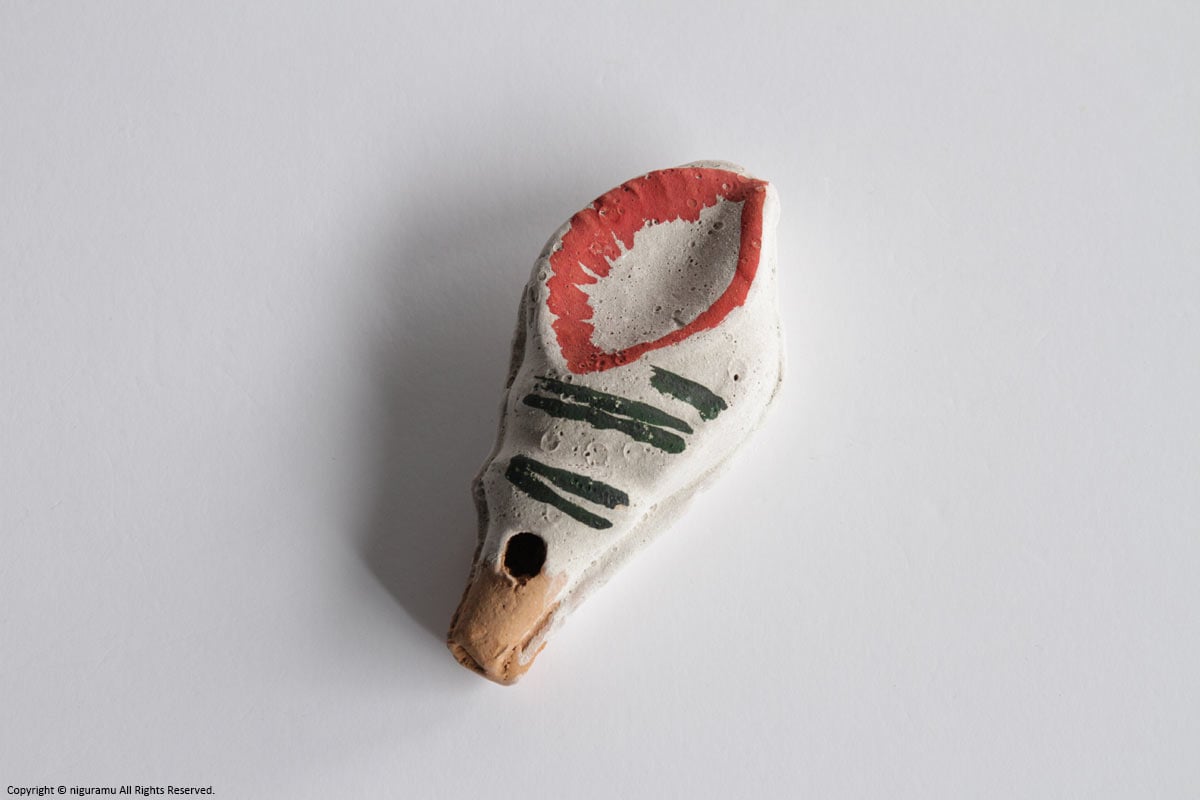
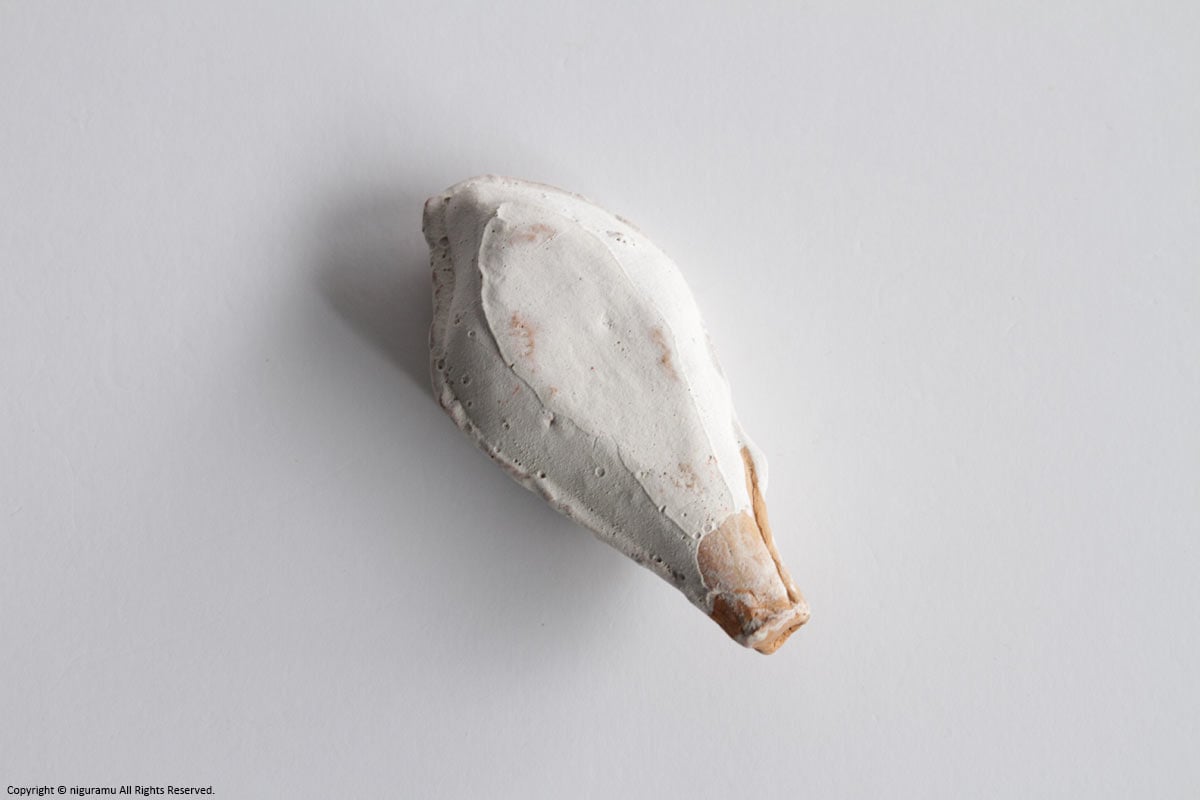
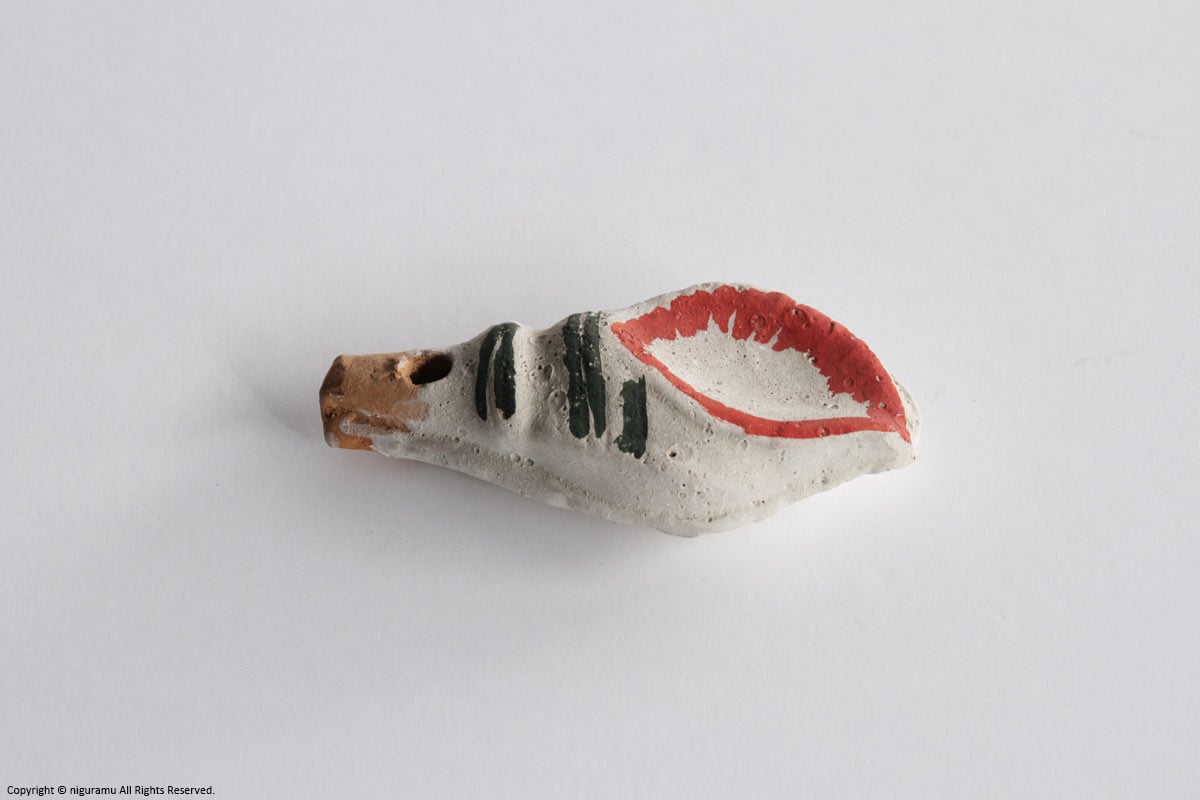
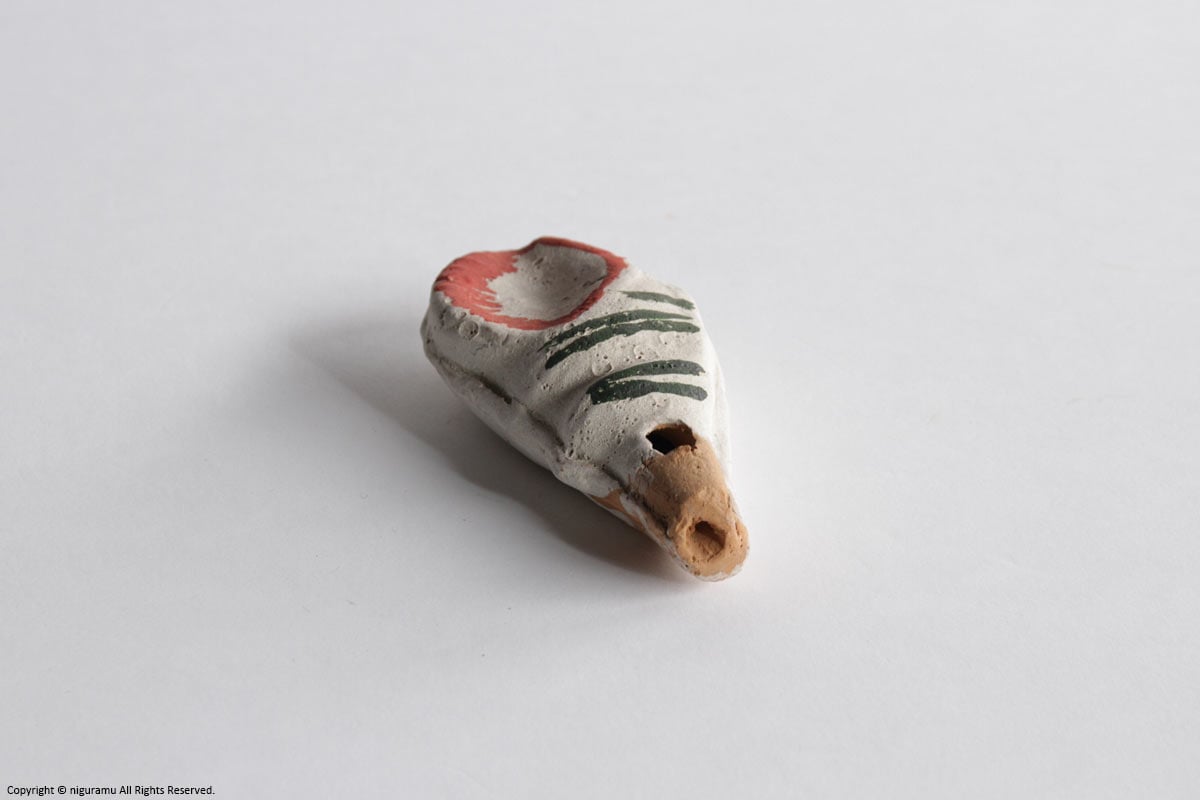
Description
- Please note that this is an old item, so some dust stains, age spots and scratches are part of the charm of old tools.
- Please note that it is sensitive to water.
- Please check the condition of used items with the pictures in advance. If you have any questions, please be sure to contact us before purchase.
- No returns after purchase. Please make your purchase after careful consideration.
Chikugo Akasaka village has been known for Akasaka-yaki pottery since the middle of the Edo period (1603-1868), when it was the official kiln of the Arima clan.
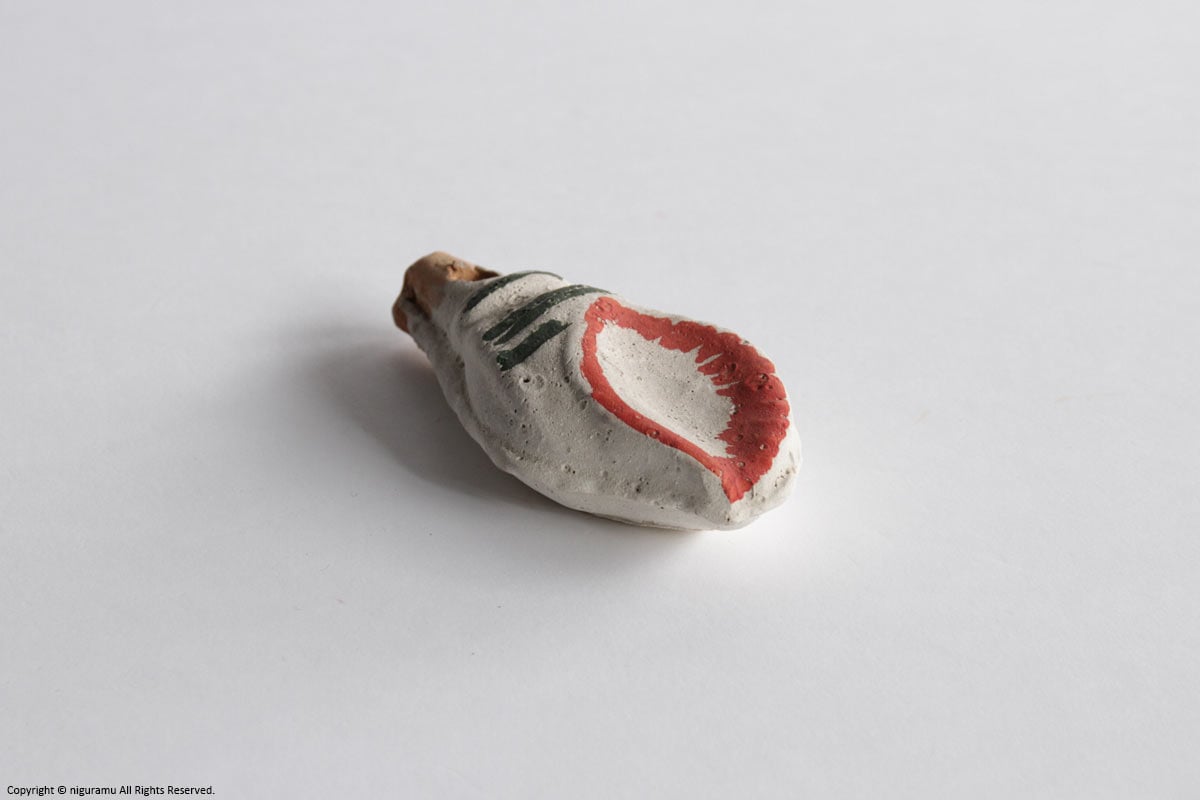
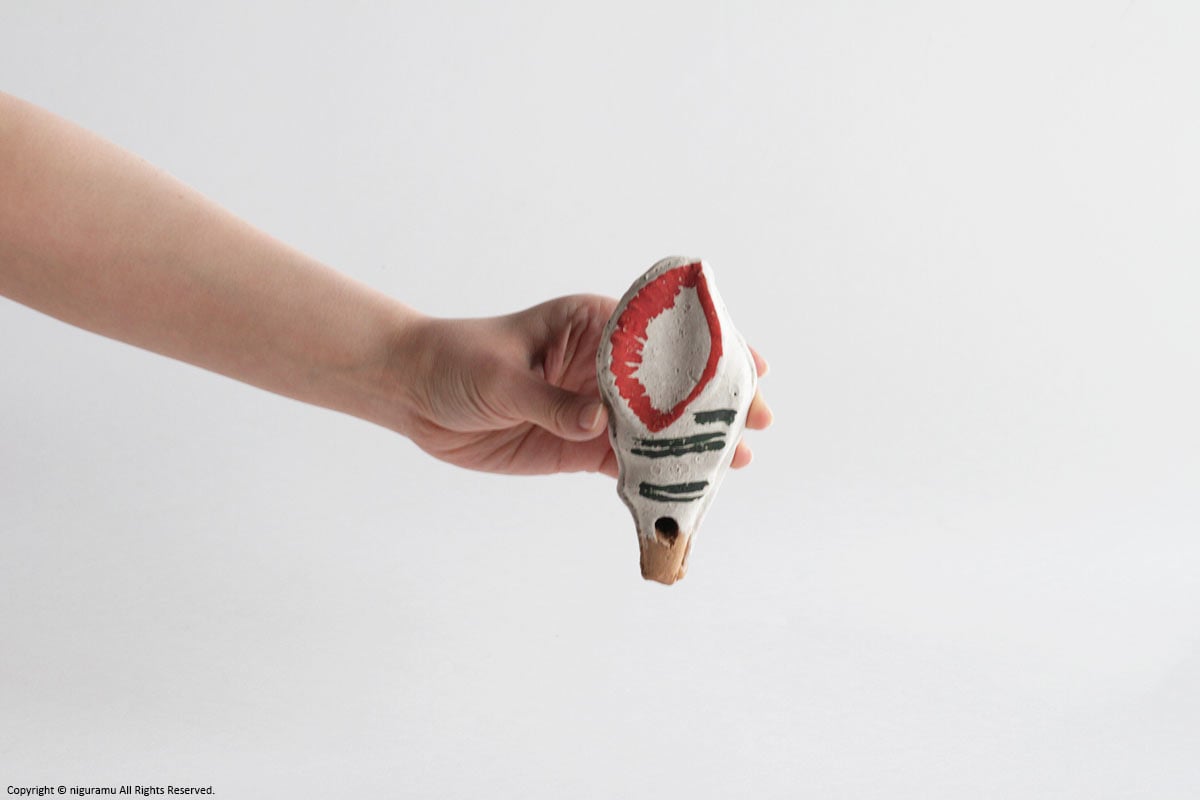
Akasaka clay dolls are said to have been produced as an afterthought by potters. Also known as “tete-poppo” (meaning clumsy or ugly), many of them are flutes, and they have been popular as children’s toys and folk art.
The production technique is simple: the clay is packed into a female mold, laminated, and baked as is out of the mold, so the joints stick out. In the past, several doll shops made several dozen kinds of dolls, but now only one doll shop, Akasaka Ame Honpo, remains, making dozens of different ones in the traditional way.
One of the 100 best local toys in Japan says, “If you visit a place called Akasaka in Chikugo, you will find a truly humble and heartwarming clay doll quietly waiting for you. The types of clay figures include a dove flute, an owl, a dove flute, and a dove flute. There are more than a dozen types of dolls, including dove flutes, owl flutes, and other flutes, as well as Fukusuke, Tenjin-sama, and monkey dolls.
Reviews
There are no reviews yet.